
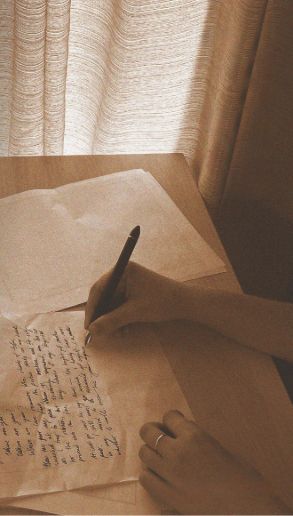
Review of ‘Ladies’ Rest and Writing Room’ by Kim Kelly
Kelly, Kim. Ladies’ Rest and Writing Room. Braidwood: Finlay Lloyd Publishers, 2023.
RRP: $24, 122pp, ISBN: 9780994516596.
Julia Garas
Ladies’ Rest and Writing Room by Kim Kelly is one of the 2023 winners of the Finlay Lloyd’s annual 20/40 publishing prize for works of nonfiction. Kelly is the author of twelve novels, including the critically acclaimed Wild Chicory and The Rat Catcher: a love story, the latter of which was longlisted for the 2022 ARA Historical Novel Prize. Kelly is also a book editor and PhD researcher of Australian historical fiction through Macquarie University. Ladies’ Rest and Writing Room, her most recent historical fiction novel, is a subtle story of friendship and love between two young women working through their devastating grief, pain and loss following World War One.
Set in 1920s Sydney, the book follows the story of Clarinda Littlemore and Dotty Bluebrook, formerly Blaubach. This name change is significant, especially during this period, as it is one of the ways Kelly challenges dominant national narratives, in this case reframing Australian national identity and belonging through the inclusion of the German-Australian community.
We see glimpses of Dotty’s life during the early wartime as she encounters growing national prejudices within Australia. Regarding her German surname, which brands her father’s successful chocolate company, she says:
It was one that didn’t look so smart on a box of chocolates these days, certainly not since the Kaiser had torn Europe apart and dragged Australia through the blood-soaked mud, too, at a cost of sixty thousand dead. (24)
Alongside the struggles of her German heritage, the overall impact of the war and its devastation is felt through Dotty’s clearly narrated mental struggles. While Dotty goes about her everyday tasks, she recognises that ‘she could not continue to live like this. Unliving’ (47). This insight into her mental state is impactful, allowing readers to experience her despair which is not outwardly visible. This feeling is reinforced by the metaphor, ‘The world was going on and on and on, and she was suspended inside this impenetrable blister of pain’ (66). This imagery conveys her personal isolation and suffering in a time that stigmatises mental illness. Moreover, it prompts us to reflect on how personal trauma and collective cultural trauma, while inseparable here, diverge. Australian collective memory has broadly commemorated the war and its shared losses, however, it also neglects to care for those impacted on a personal level, particularly those marginalised by gender or heritage.
The story primarily unfolds in Sydney’s once-famous Farmer’s Department Store, Ladies’ Rest and Writing Room, which is described as:
a most lady-like room, the Ladies’ Rest and Writing Room—mahogany furniture legs all daintily turned, a maidenhair fern overspilling a central amphora, and fresh blooms on every tabletop. Quaint. Romantic. (18)
Farmer and Company, commonly known as ‘Farmer’s’, was a retail store in Sydney, Australia, established in the late 1800s until it was acquired by Myer Emporium Limited in the 1960s. Dotty and Clarinda’s paths cross unexpectedly in this department store’s Ladies’ Rest and Writing Room, recognising each other from their school days.
Having previously shared very similar lives, Clarinda and Dotty now stand on different sides of the store. Clarinda working to provide for herself, while Dotty remains a consumer, funded by her father’s chocolate company that had come out of the war mostly unscathed. Clarinda is impacted by the war in multiple ways, losing much of her family and with it her money and social standing. With no one to fall back on she is unexpectedly pushed into the workforce, becoming a working-class Australian almost overnight. Although Clarinda struggles to accept the different life circumstances that have been bestowed upon her and Dotty, this is put aside in a mutual acknowledgement of how they have both suffered and are still suffering following the war.
Grief is infused into every aspect of the characters’ lives, although it is shown to haunt them in different ways. Where Dotty feels that she cannot go on, Clarinda is driven by the need to persist in helping those around her. At first, this is her mother, and then she extends this care to Dotty. In these new circumstances spurred on by their meeting at the Ladies’ Rest and Writing Room, they begin to build a new relationship from their shared deep understanding of grief and its impacts.
Clarinda and Dotty are the heart of this novel, and it is their growing connection that shapes their individual outcomes. This female friendship is built on recognition of each other and an attentiveness to personal experiences which relegates the narrative of the war itself. Ladies’ Rest and Writing Room is different to other post-war texts in this way, privileging the individual figure over the collective national and critiquing cultural forgetting.
Julia Garas completed her PhD at Curtin University in Perth, Western Australia, where she currently teaches as a sessional academic. Her research examines contemporary Australian literature and television, with particular interests in national memory, national identity, and decolonial theory. She has recently published work in Limina: A journal of historical and cultural studies and Exhume.
Partners